
Upper Division • Grades 9 – 12
The John Senuta Math Center and The Day Science and Engineering Center

Where curiosity becomes discovery.
Imagine a place where questions become experiments and ideas become prototypes. These facilities bring students, teachers and disciplines together, where curiosity leads to discovery and every student is encouraged to be an original.
Benefits for Students
-
Interdisciplinary learning:
Natural collaboration across math, sciences and engineering.
-
Scientific literacy, mathematical confidence and problem-solving:
Outcomes for every graduate, not just STEM-bound students.
-
Building community through shared spaces and traditions:
The indoor/outdoor auditorium will serve as a space for grade-level gatherings, student presentations, residential movie nights, X-Term showcases and Grade 9 Science Capstone Night.
-
Continuity with Stevenson's academic philosophy:
Curiosity and joy alongside rigor and challenge.
By the Numbers
36,000
square feet, two stories and a basement
6
math classrooms
2
dry-lab physics classrooms
6
science labs with corresponding prep lab
4x
the space of the prior facility
13
collaborative spaces

Facility Features
- State-of-the-art laboratories – space for advanced, college level science work.
- Engineering & fabrication workshop – robotics, design and hands-on building.
- Astronomy observation deck – telescopes and imaging equipment.
- Collaborative, interdisciplinary spaces – flexible areas for cross-subject projects and seminars.
- Sustainability features, including rooftop solar arrays (the first renewable energy installation on campus).
- Teaching kitchen, where students explore the science behind culinary arts.

How the Space Deepens Learning
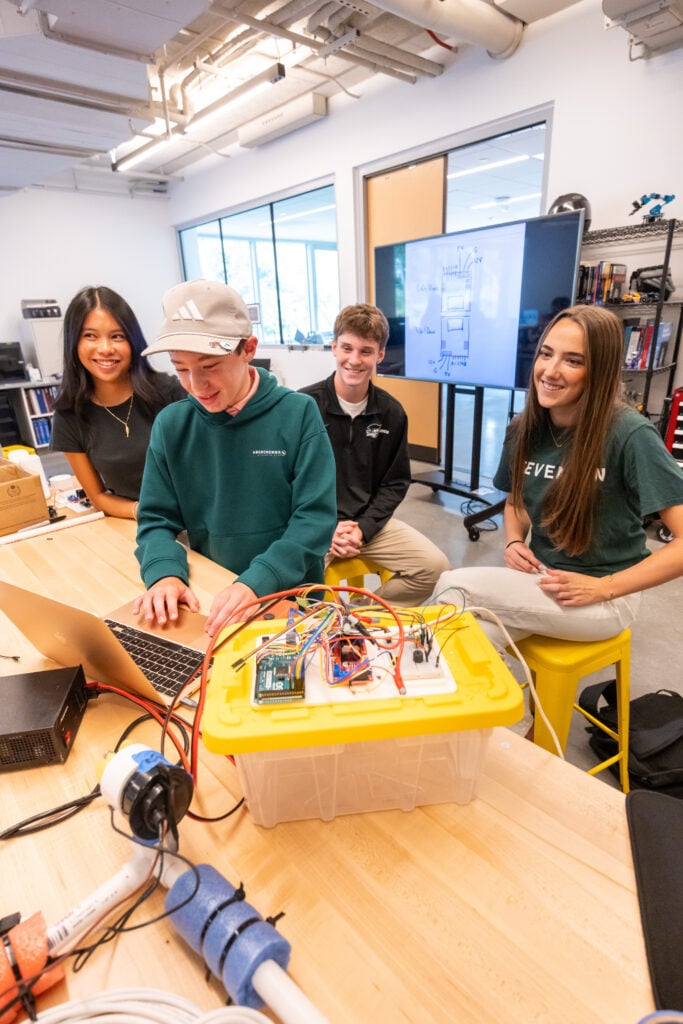
Disciplines that used to live apart now share a building. Math, science and engineering faculty helped design the space together, and robotics/engineering students – previously spread across three separate locations on campus – not work out of one central hub, making cross-pollination between subjects a daily reality rather than an occasional project.
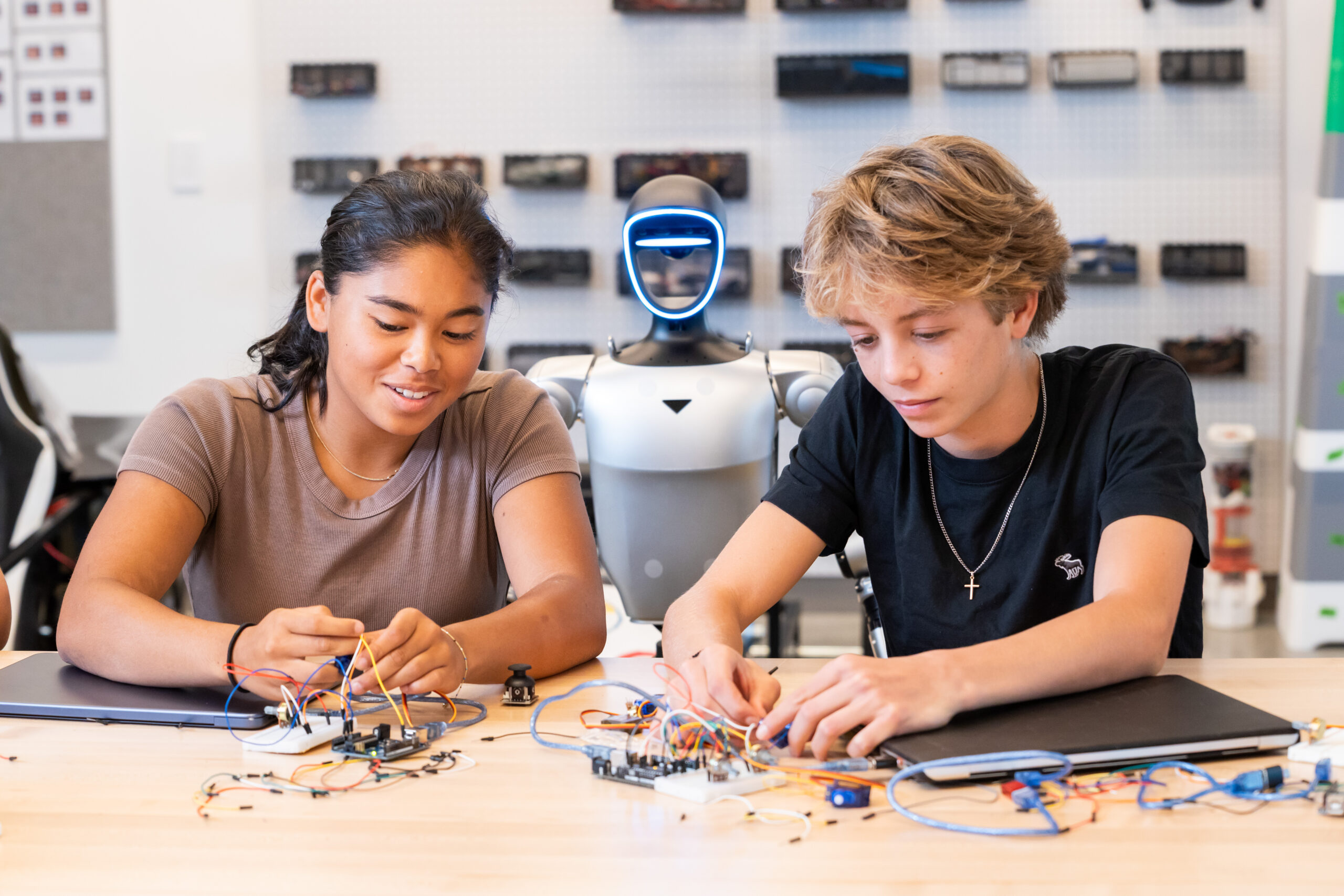
Facilities usually reserved for college labs are now available to Stevenson students. Dedicated makerspace for robotics and engineering means students no longer have to pack up mid-project between classes – work stays out, in progress, the way it would in a university lab.
Real research, not simulated research. From the Grade 9 Capstone through senior year, students engage in authentic research – culminating in a new Senior Research Program that pairs seniors with local researchers to learn actual research protocol, with the goal of contributing to genuine scientific work, potentially even a published paper.
Hands-on making across disciplines. Woodworking and metalworking shops sit alongside a teaching kitchen, so a student might prototype a robotics part on period and study food science the next. Hydroponics is planned for the building’s lower level, and gardens may supply fresh produce for the culinary/teaching kitchen program – typing growing and cooking together on-site.
What if your classroom project could reach space? A recent Stevenson senior designed and built a prototype CubeSat satellite. It’s the kind of ambitious, hands-on work this new space makes possible – giving students room to imagine boldly, build fearlessly and turn curiosity into discovery.
Build to spark curiosity outside of class time, too. The space is design for students to linger – not just attend class and leave – creating more casual, informal contact between students and faculty.
Begin YourNew Adventureat Stevenson
Complete our request form and we'll guide you through each step of the Admissions process.