This fall, three Stevenson researchers are getting recognized well beyond Pebble Beach. A faculty member built a shark-tagging instrument from scratch. An alum came back to teach the same subject he once studied at Berkeley. And a Grade 11 student presented his own paper at a conference in the UK. Their work looks different on the surface, but it comes from the same place: curiosity that didn’t stop at the classroom door.
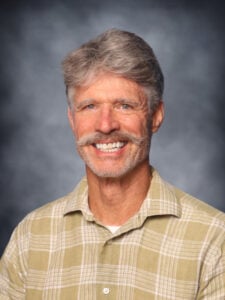 Kevin D’Angelo: A $100 Instrument That Can Do a $5,000 Job
Kevin D’Angelo, who teaches engineering and applied science, builds things in his spare time – and one of them is now tagging great white sharks.
It started with a question from colleague Ron Provost: could Kevin build a low-cost CTD (a probe that measures conductivity, temperature and depth) for his marine science class? Kevin did – then kept going, shrinking the design down until it was small enough to attach to an animal. He calibrated early versions by making salt water in his own fridge at home.
Students got to use it before the sharks did. Kevin field-tested the instrument during Grade 9 Elkhorn Slough Day and on X-Term in Mexico, where a student successfully deployed it and collected real data. “The students succeeded in deploying and collecting the data, and that success affected those students in a very positive way,” Kevin said.
From there, the instrument went through testing with MBARI scientists down to 800 feet in the Monterey Canyon, and is now being used by Dr. Sal Jorgensen at CSUMB to tag great white sharks. On Sept. 23, Kevin presented the project – “Miniature Open-Source CTD for Animal Tagging” – at the OCEANS 2026 Monterey conference, an international gathering of ocean engineers.
“I get all kinds of great ideas and support from Stevenson’s amazing faculty,” Kevin said. “I am proud to be a part of the community.”
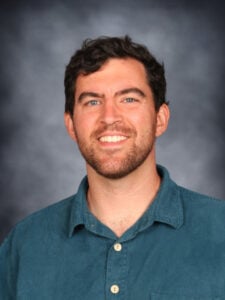 Ryan Hayes ’16: Coming Back to Teach What He Once Learned
Ryan Hayes graduated from Stevenson in 2016. This year, he returned – not as a visitor, but as a member of the Upper Division math and science faculty.
In between, Ryan earned a graduate degree in nuclear engineering at UC Berkeley, where he taught engineering ethics and researched high-temperature chemistry in advanced nuclear reactor systems. A paper he contributed to was recently published: a study of how a next-generation reactor coolant – molten salt heated to 700°C – corrodes the metal around it over time. “I tested the corrosion of different metal alloys in contact with this potential coolant to understand how structural components of the reactor would degrade,” Ryan explained.
Asked what brought him back to Stevenson, Ryan pointed to the school’s motto and values. “My love of learning was born here,” he said. “Stevenson gave me the skills to build a strong academic foundation for success beyond high school and the tools to lead a joyful life. I look forward to returning the favor.”
He’s also seeing the school differently now. “It’s quite the feeling sitting in an office with my own teachers from 10+ years ago,” he said, “and seeing the effort that is put in behind the scenes.”
For his students, Ryan hopes for something bigger than any one lesson. “When curiosity strikes, I want my students to feel confident that they have the tools to follow wherever it leads.”
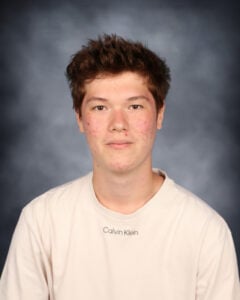 Winston L. ’28: From Nuclear History to a Conference Stage
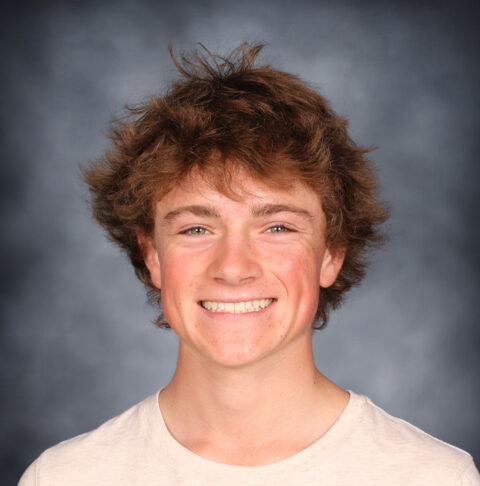
Winston L., a Grade 11 student who transferred to Stevenson last year, spent his summer writing a paper about artificial intelligence – and ended up presenting it to professors and PhD students at the University of Exeter in the UK.
The idea grew out of an earlier project on nuclear counter-proliferation. “As I used AI for that research project, I began to think there should also be a counter-proliferation framework for AI,” Winston said. Working independently, he borrowed from the history of nuclear policy to think through a modern problem: how to keep powerful AI tools out of the wrong hands. The resulting paper, “Uranium as Chips,” was accepted for an oral presentation at the Superintelligence Conference – a surprise, since Winston had only expected a poster slot.
Outside the classroom, Winston is the goalie for varsity lacrosse and last year’s chief prosecutor for Mock Trial. With enough students to field a full team, he’s hoping to get Stevenson back into interscholastic Mock Trial competition this winter.

Kevin, Ryan and Winston aren’t the only ones pushing research forward this year. Faculty member Becca Upjohn recently returned from a conference on teaching science research and is just launching this year’s science fair contest; additionally, she’s leading Stevenson’s new science research class – built to help more students turn their own curiosity into projects like these. And our ninth graders are beginning to explore their own original research questions for their signature capstone projects in their ninth grade science course, Principles of Scientific Inquiry. We look forward to more exciting independent research – and the places it will take our young scientists – down the road.