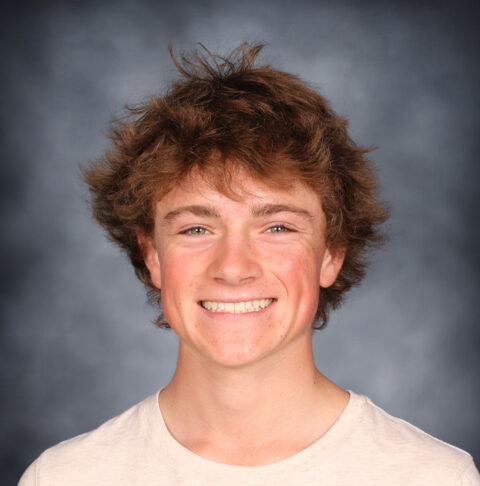
At Stevenson, Anderson discovered his love for music and the guitar. Under the guidance of Dr. Robert Klevan, then head of the Music department, he realized that music could be more than just a passion – it could be a career. Encouraged by Dr. Klevan, Anderson pursued a jazz major at the University of Oregon before ultimately heading to Los Angeles to immerse himself in the music scene.
Breaking into the Music Industry
Anderson’s move to LA led him first to a music school where he got more into music production and songwriting. He also started a band that was fortunate enough to get signed by a label, with one of their songs being chosen as the opening theme for the hit television show Suits. While the band’s record deal didn’t lead to long-term success, Anderson realized it’s the off-ramps and on-ramps in life that can be serendipitous, as he went on to become a music executive at Capitol Records, producing music and working behind the scenes in the industry.
At Capital Records he signed the band Glass Animals and even had the opportunity to write songs with Billie Eilish. It was during this time that he developed a fascination with vinyl records and learned more about the outdated, environmentally harmful processes used in their production.
The Birth of Good Neighbor
With the arrival of the COVID-19 pandemic, Anderson saw an opportunity for change. He co-founded Good Neighbor with Reyna Bryan, an entrepreneur and innovator in sustainable packaging technology and supply chain. Good Neighbor is focused on revolutionizing the vinyl industry by making records more sustainable. They do this by manufacturing vinyl records using PET (polyethylene terephthalate), reducing environmental harm while maintaining excellent sound quality.
Unlike traditional vinyl, which relies on PVC – one of the most toxic plastics – PET is highly recyclable and can be repurposed for various uses, reducing waste and supporting sustainability. Good Neighbor also innovated the vinyl manufacturing process by shifting from hydraulic pressing to injection molding, cutting down on electricity use and lowering their carbon footprint.
“With our team of six, we are disrupting an industry that hasn’t changed since the 1940s,” Anderson shares.
Being a Good Neighbor: Giving Back in Times of Crisis
The recent wildfires in Los Angeles hit close to home for Anderson. While his family remained safe, the devastation around him was profound. In response, Good Neighbor partnered with music industry colleagues at smaller labels who were putting out music compilations for charity, using their proprietary PET vinyl process, with all proceeds going to organizations assisting in fire relief efforts.
“The first week of fires was terrifying. We had no power, and homes were burning all around us,” Anderson recalls. “It didn’t feel right to just carry on with business as usual. But through music, we found a way to help.”
Reflecting on Stevenson
As Anderson prepares to celebrate his 30th Stevenson reunion, he fondly recalls the friendships and experiences that shaped him.
“My favorite memories are the times spent with friends, many of whom I still keep in touch with,” he says. “Fred Sanchez ‘95 and I met on our first day of freshman year, and we’ve remained close ever since – skateboarding in Pacific Grove, playing lacrosse and basketball, and hanging at the beach.”
He credits Dr. Klevan with fostering his artistic expression and remembers English teacher Fred Roth as an intellectual giant who championed his creative writing. “If I could go back to any class, it would be Fred Roth’s. He was a genius among us, and I had no idea at the time.”
Reflecting on his journey, Anderson emphasizes the enduring value of the friendships formed at Stevenson. “To current Stevenson students, I would say, look around – you may not realize it now, but some of your friends today will be there to support and carry you through the next four, eight, even 40 years. Treat them well.”